

VC-231G
1-Port 10/100/1000T Ethernet to VDSL2 Converter
150/150Mbps Downstream/Upstream, High Performance Gigabit Ethernet over Phone Wire Solution
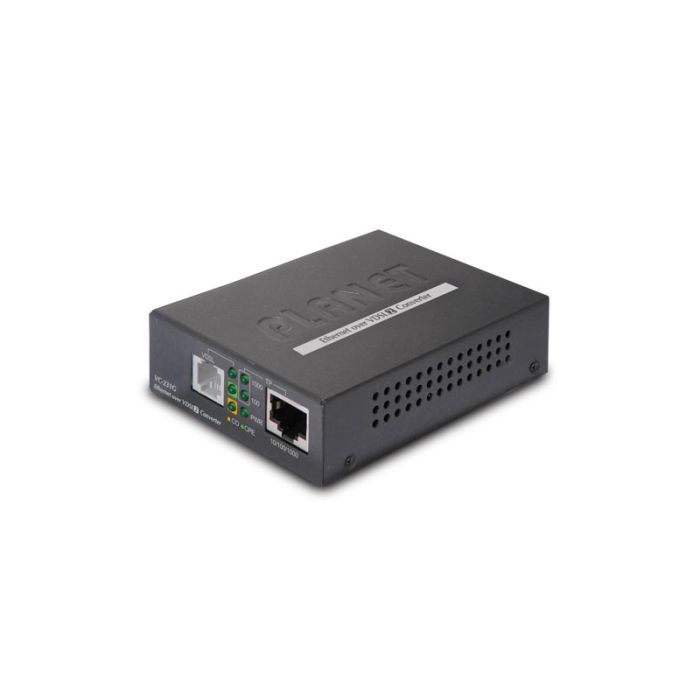
PLANET VC-231G, a new-generation and high-performance Gigabit Ethernet-over-VDSL2 Converter, works well with a pervasive telephone line network with a symmetric data rate of up to 150/150Mbps (G.INP, Sym, 8dB) over a distance of 300m and 22/10Mbps over a long distance of 1.4km. It is based on the two-core networking technology, Gigabit Ethernet and VDSL2 (Very-high-data-rate Digital Subscriber Line 2). The VDSL2 technology offers absolutely the fastest data transmission speed over the existing copper telephone lines without the need of rewiring.
High-performance Ethernet over VDSL2
Via the latest VDSL2 technology, PLANET VC-231G offers high-speed access to Internet, up to 190Mbps for both upstream and downstream data transmissions. With integrated support for the ITU-T’s new G.993.5 vectoring technology, the VC-231G works in conjunction with vectoring-enabled DSLAMs to remove crosstalk interference and improve maximum line bandwidth across the existing copper infrastructure.
Implementing with Existing Telephone Copper Wires
The VC-231G is also a Long Reach Ethernet (LRE) converter providing one RJ45 Ethernet port and one RJ11 phone jack, which is for VDSL2 connection. Use the additional splitter from the package of the VC-231G to share the existing phone line with POTS, thus replacing the existing copper wiring is not necessary. Just plug the VC-231G with the additional splitter into the existing RJ11 telephone jack and a high-performance VDSL2 network can be connected. It is ideal for use as an Ethernet extender to an existing Ethernet network.
Delivering High-demanding Service Connectivity for ISP/Triple Play Devices
The VC-231G provides an excellent bandwidth demand for the triple play devices for home entertainment and communication. With the asymmetric data transmission of 190/100Mbps (G.INP, Asym, 8dB), the VC-231G enables many multi-media services to work on the local Internet, such as VoD (video on demand), voice over IP, video phone, IPTV, Internet caching server, distance education, and so on.

CUSTOMERS ALSO BOUGHT

Clarity CLAPRIMO22 AV PR